


 Česky (CZK)
 Slovensky (EUR)
 Deutsch (EUR)
 Polski (PLN)
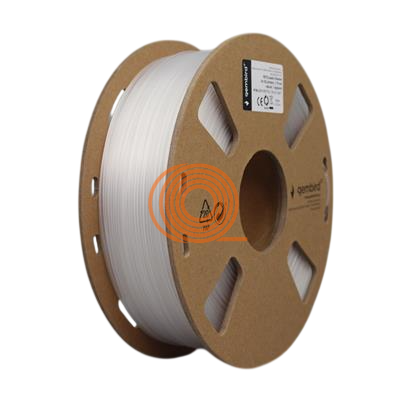
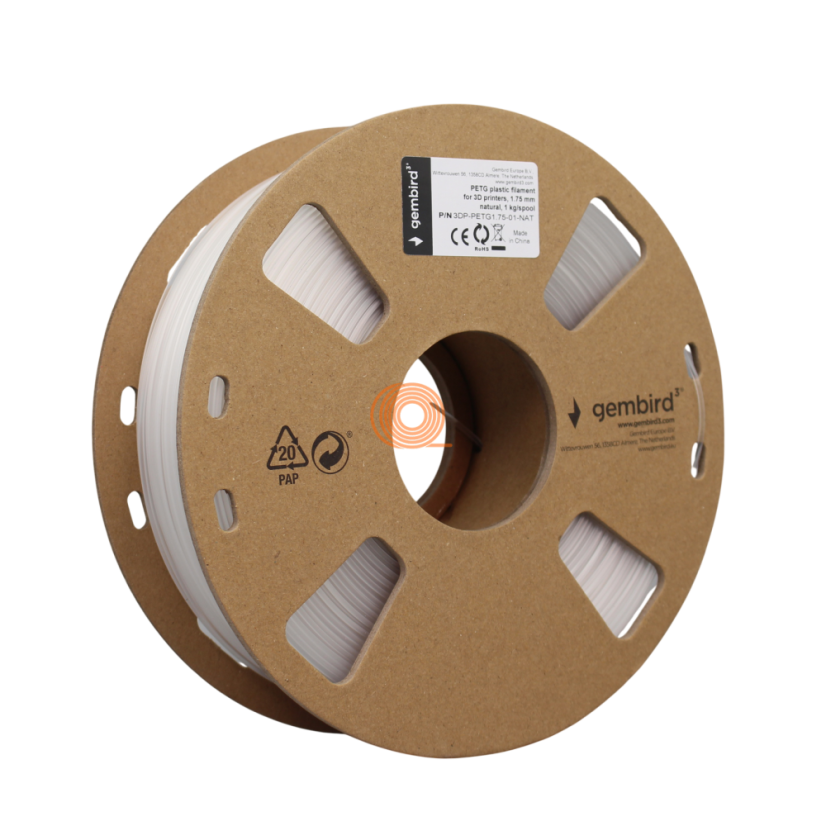


PETG 1.75 mm 1 kg – A durable, tough and versatile filament for 3D printing
Discover the versatile PETG filament (1.75 mm, 1 kg), which offers the ideal balance between the printability of PLA and the mechanical and chemical resistance of ABS. Glycol-modified polyethylene terephthalate (PETG) is a strong and tough thermoplastic with minimal shrinkage, allowing for easy printing of both large and flat models without warping or layer delamination.
The high precision of the filament, with a tolerance of ±0.05 mm, ensures smooth extrusion without jamming in the extruder. PETG excels in terms of excellent inter-layer adhesion, high tensile strength (up to 120% elongation at break) and outstanding chemical resistance. Furthermore, the material is fully recyclable and ideal for functional parts for both indoor and outdoor use.
Key benefits
- High strength and impact resistance: The material is more flexible and less brittle than PLA or acrylic.
- Minimal shrinkage and excellent adhesion: Enables easy printing of large-scale prints without warping or peeling from the build plate.
- High chemical resistance: Excellent resistance to acids, alkalis and cleaning agents.
- 100% recyclable: A more environmentally friendly option with a low carbon footprint.
- Wide compatibility: Adheres easily to glass, PEI sheets, Kapton and other common printing surfaces.
Technical specifications
Parameter Value
Material PETG (Glycol-modified polyethylene terephthalate)
Filament diameter 1.75 mm (± 0.05 mm)
Filament weight 1 kg (2.2 lbs)
Density (at 240 °C) 1.27 g/cm³
Melt flow index (MFI) 20 g/10 min (200 °C / 5 kg)
Recommended nozzle temperature 220–260 °C
Heat deflection temperature (HDT at 0.455 MPa) 60–80 °C
Yield strength (at 5 mm/min) 50 MPa
Impact strength 8.7 kJ/m²
Elongation at break 120 %
Spool dimensions Outer diameter 200 mm | height 67 mm | centre hole 53 mm
Recommended print settings
Print at a nozzle temperature of 220–260 °C and with the heated bed set to 70–85 °C. To prevent stringing, we recommend slightly reducing the nozzle temperature, fine-tuning retraction settings and setting the print cooling to 30–60 per cent. To make it easier to remove the print from a glass or PEI bed (to prevent damage to the surface caused by excessive adhesion), we recommend using a release layer (e.g. 3Dlac or office glue).
Accessories15


3DLac Nylon
3DLac Plus


3DLac Stick


3DLac
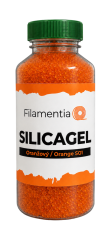
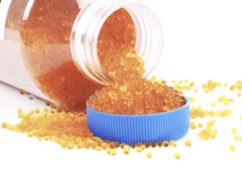
Silica Gel S01 - Red
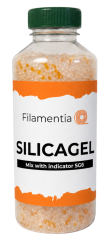
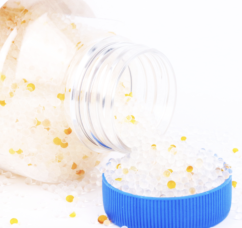
Silica Gel SG6 - With Moisture Indicator

Silica gel SG5 - Clear


Isopropylalkohol 1L IPA with Sprayer


Isopropyl alcohol 1L IPA

Dimafix Pen
Dimafix Spray

Filament cutters

Bambu Lab adhesive glue stick


DevilDesign - product for better adhesion
